nobeltnium
New member
- Joined
- Aug 18, 2020
- Messages
- 12
- Points
- 1
Disclaimer: Despite having goggle, IR laser still scare the shit out of me so I'll be trigger the laser remotely, from another room and watch it through a full spectrum camera. Then physically unplug the battery pack before entering the laser room. Keep your eye balls guys.
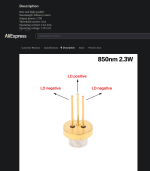
I'm planning to drive a 2.3W laser diode, and this is the spec
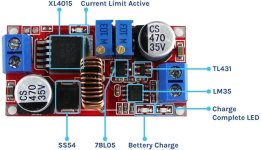
Using this DC-DC buck converter to drive the diode. The 2 potentiometer control Voltage and Currents.
Powered by 2x 18650 battery (8.4V input)
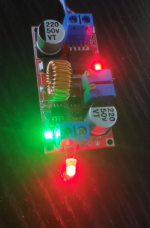
So far I've only test using it on a red LED which operate in about the same voltage range. I set the Voltage to 2.2 and leave the current at max (5 Ampere). The LED seems to work alright so far.
I also run a few high powered LED at >3V and also max current. Thing seems to work alright.
Would it work the same for a laser diode? My thinking is that as long as the voltage is right, the diode/LED will only take whatever current it needs and don't have to worry about over current. But I want to hear the opinion from people with more experience
On a side note, on Aliexpress I saw a buyer show case his diode test using a 50W resistor connect to the diode in series.
I'm planning to drive a 2.3W laser diode, and this is the spec
Using this DC-DC buck converter to drive the diode. The 2 potentiometer control Voltage and Currents.
Powered by 2x 18650 battery (8.4V input)
So far I've only test using it on a red LED which operate in about the same voltage range. I set the Voltage to 2.2 and leave the current at max (5 Ampere). The LED seems to work alright so far.
I also run a few high powered LED at >3V and also max current. Thing seems to work alright.
Would it work the same for a laser diode? My thinking is that as long as the voltage is right, the diode/LED will only take whatever current it needs and don't have to worry about over current. But I want to hear the opinion from people with more experience
On a side note, on Aliexpress I saw a buyer show case his diode test using a 50W resistor connect to the diode in series.